
17.8.2026
8
mins
By
Josh Dry
Quick answer: hot water is about 30% of the average New Zealand household's energy use, which means it's the biggest chunk of most power bills, yet it's often not thought about. There are four ways to cut it, starting with the cheapest: move when the cylinder heats, insulate the cylinder and its pipes, replace it with a hot water heat pump, and/or divert your own solar into it. The one thing not to do is turn the temperature down, because the Building Code requires storage at 60 degrees to keep legionella at bay.
Ask someone what electrifying a home looks like and they'll point at solar panels on a roof. Ask what's actually costing them money and they'll blame the heat pump, the dryer, or the kids' 20-minute showers.
Yet the cylinder in the cupboard, that nobody has looked at since moving in, is likely where big savings could be made.
Why hot water is often where you can save the most on bills
Energy Efficiency and Conservation Authority (EECA) puts water heating at about 30% of the average New Zealand household's energy use. Not 30% of your heating. 30% of everything: the lights, the fridge, the telly, the heat pump, the lot.
It's invisible in a way space heating isn't. You feel cold and you turn the heat pump on, so you associate warmth with cost. Hot water just comes straight out the tap. The cylinder heats up quietly overnight and then sits there losing heat to the cupboard, leaving you to find out what it cost a month later.
That invisibility is why it's often the best value thing to look at first. It's a large, steady load that you can make more efficient without changing how you live.
Two different appliances are called a heat pump
When most New Zealanders say "heat pump" they mean the unit on the living room wall that blows warm air out.
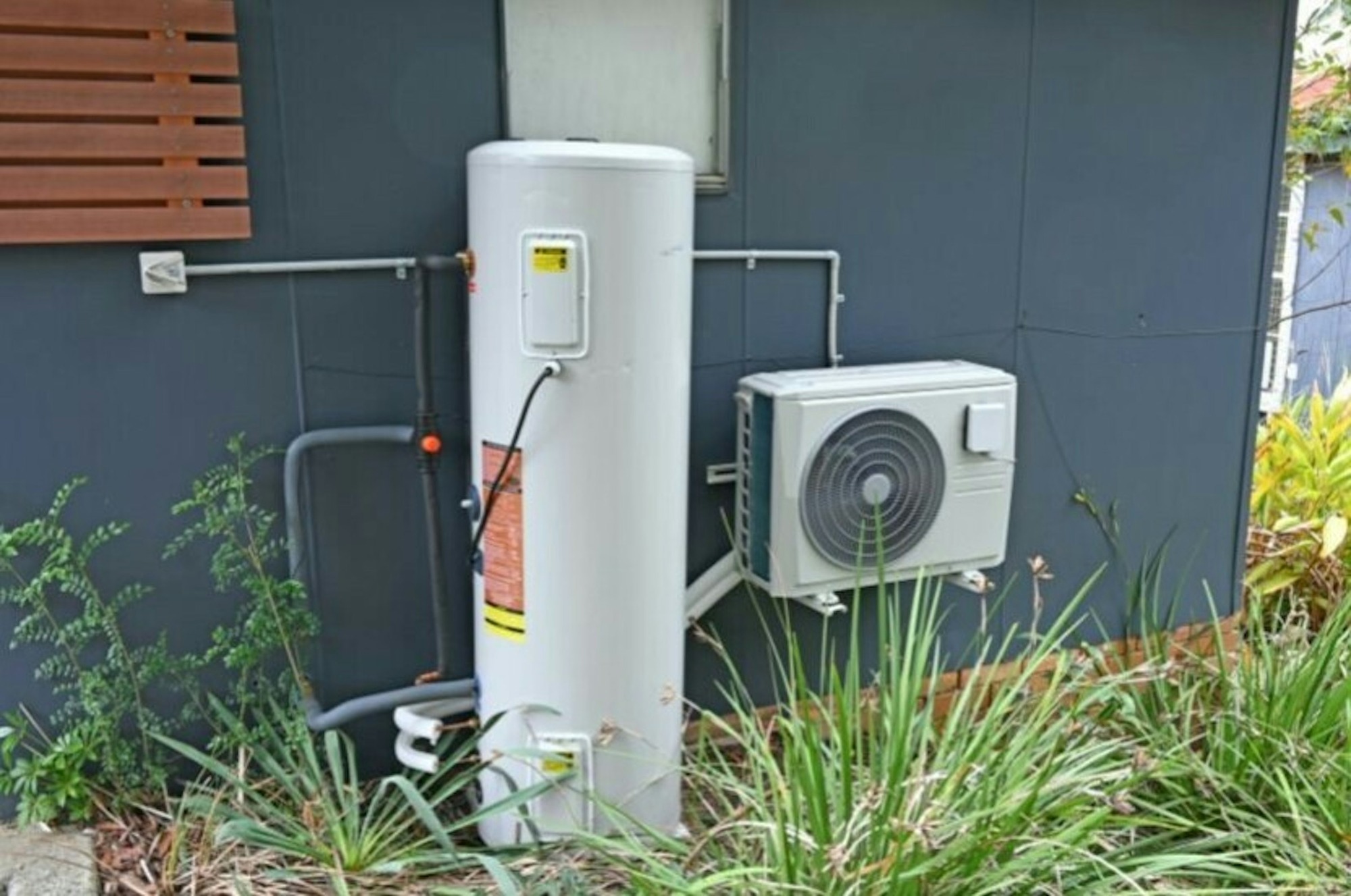
A hot water heat pump is a different appliance. It replaces a hot water cylinder, or bolts onto one, and it heats your water by pulling warmth out of the air rather than by running an electric element. Same principle as the one on the wall, with a different job.
Because a hot water heat pump moves heat instead of turning electricity into heat, it can deliver two to four times more energy to your water than the electricity it consumes. This makes it significantly more efficient than gas-heated hot water systems.
Four ways to cut your hot water bill, cheapest first
1. Change the time it's heating. Cost: nothing.
This tip is because of a recent rule change, so it's worth doing now to get in on the savings ASAP, rather than leaving it till next year.
The Electricity Authority has required every retailer with 5% or more of the market to offer at least one pricing plan with cheaper off-peak rates, available to customers by 1 July 2026. That covers the big retailers most households are with.
Your cylinder doesn't mind when it does the heating. It just heats the water and then stores it. So, if your plan charges less at night, in the middle of the day, or at the weekend, move the cylinder's heating into those hours for easy savings. Some cylinders are already on ripple control or a night rate, but many aren't so it's worth checking.
Not sure what your cylinder's costing you, or whether you're even on the right plan? Get an estimate in a couple minutes via the Cogo platform. Our team are here to help if you've got any questions.
2. Wrap the cylinder and lag the pipes. Cost: small.
An older uninsulated or poorly insulated cylinder loses heat continuously into a cupboard where nobody needs it, except your wet socks and shoes. A cylinder wrap and some pipe lagging cost very little and stop some of that.
3. Replace it with a hot water heat pump. Cost: around $7k but worth it!
This is the big one. EECA says a hot water heat pump can cut the energy used for hot water by 50% or more. Applied to roughly 30% of your total household energy, that's a serious dent, and it's the reason this appliance keeps coming up.
Personal aside: when we bought our first house just under two years ago, the building report flagged a hot water cylinder already past ten years old. Trying to see it through to the end just meant it leaked through the cupboard, so out it came and a hot water heat pump went in outside, that I now run from an app. We now get lower bills, lower emissions, better pressure, faster hot water, and a whole new cupboard to use for clothing and linen overflow! Easily one of the best upgrades we've made.
Not many NZ homes are making the most of them yet. EECA's own market research puts it at about 12,000 installed in New Zealand homes, out of around 2 million hot water systems. So, the appliance that could cut the single biggest load in the average home is in fewer than one in a hundred of them.
Worth knowing before you shop: they work by moving heat out of the air, so where the unit goes matters, they make some noise like any compressor, and they perform less well in genuinely cold spots. A decent installer will talk you through this, and help you find the best place to put it.
4. Divert your own solar into it. Cost: depends what you already have.
If you already have solar panels, heating water with your own midday generation is usually worth more than exporting it, because what you are paid to export is less than what you pay to buy. This is the same self-consumption logic that decides whether panels stack up in the first place, which we went through in our blog on solar and batteries.
The one thing not to do
Do not turn the cylinder thermostat down to save money.
New Zealand's Building Code clause G12 requires stored hot water to be kept at 60 degrees or above, because legionella bacteria grow in warm water and 60 degrees is what keeps them in check. The way to prevent scalding isn't a lower cylinder temperature, it's to do with a tempering valve that limits what comes out of the tap. Since 1 November 2024 the maximum for bathroom and shower outlets is 50 degrees.
Change when your water is heated, not what temperature it's storing water at. If your hot water is coming out scalding hot, that's a tempering valve question for a plumber, not a thermostat you should be adjusting yourself.
How to decide what to do, in about ten minutes
FAQ
How much of my power bill is hot water?
About 30% of the average New Zealand household's energy use goes on water heating, according to EECA. Your own share depends on how many people are in the house and how long the showers are, so treat 30% as the middle of the range rather than your number.
Is a hot water heat pump the same as the heat pump on my wall?
No. The wall unit heats your air. A hot water heat pump heats your water and replaces your cylinder. Having one does not mean you have the other.
Should I turn my hot water cylinder down to save money?
No. The Building Code requires stored water at 60 degrees or above to control legionella. Tap temperature is limited separately by a tempering valve, capped at 50 degrees at bathroom outlets since November 2024. Shift when the cylinder heats instead.
Do I need solar to make any of this worthwhile?
No. The cheapest step, moving your cylinder's heating into off-peak hours, needs no solar and no new hardware, just the right plan and the right timer setting.
Is gas hot water cheaper than electric?
It depends on your rates and system. Gas has a daily fixed charge on top of what you burn, so a household using little hot water can pay a surprising amount for the connection alone. Worth pricing properly for your own house rather than assuming either way.
Gas is about 21c/kWh of heat delivered (LPG is about 35c/kWh).
As for electric, there are two very different ways to heat your water:
Based on average energy prices from Electricity Authority and Powerswitch, and system efficiencies from Rewiring Aotearoa.
Run your own numbers
None of the above beats doing it for your own place. The Cogo platform takes your home and your usage and shows what changing your hot water, your heating or both would mean for your bills, then points you at vetted installers if you want to go further.
See what your hot water is costing you
This article is general information only. It is not financial, energy or product advice. What you save depends on your home, your power plan and how you use energy, so get quotes from qualified installers or licensed dealers and seek independent advice for your own situation. Work on hot water systems, including tempering valves and thermostats, should be done by a licensed plumber or electrician.
Read More
.png)
Subscribe to our newsletter to keep up to date with the latest news and articles about carbon management.
